Introduction
Across the United States and the United Kingdom, AEC professionals and companies are increasingly adopting Revit BIM Modeling Services to manage design coordination, improve documentation, and reduce construction risk. Architects rely on it to refine spatial concepts. Engineers use it to coordinate structural and MEP systems. Contractors often depend on the model to plan installations and avoid conflicts before construction begins.
But what exactly makes Revit so valuable for AEC teams?
Let’s walk through the top 10 benefits of Revit BIM Modeling Services for AEC professionals with this expert insight-based article by Cresire, a leading BIM Service Provider globally.
List of Top 10 Benefits of Revit BIM Modeling Services

1. Improved Design Accuracy and Precision
One of the first advantages teams experience with Revit is simply accuracy.
Traditional CAD drawings are composed of lines, arcs, and annotations. They represent building elements, but they don’t actually understand what those elements are.
Revit works differently. Instead of lines, the model contains intelligent objects such as walls, beams, slabs, ducts, and windows. Each component carries parameters that define its properties.
2. Enhanced Collaboration Across Disciplines
Architectural designs rarely happen in isolation. A single design of a building involves project stakeholders like architects, structural engineers, HVAC designers, electrical engineers, contractors, and project managers.
Of course the coordination and collaboration becomes challenging when all the disciplines work with disconnected drawings.
The benefits of Revit BIM modeling services help solve coordination issues by creating a shared digital environment in which multiple teams contribute to the same project model.
3. Efficient Clash Detection and Conflict Resolution
If you have spent time on construction sites, you have probably seen it happen.
- A duct collides with a beam.
- A sprinkler pipe runs directly through a cable tray.
- Or a structural brace suddenly occupies the same space as a mechanical shaft.
These clashes rarely appear in 2D drawings. They become obvious only during construction, when changes are expensive.
With 3D BIM modeling in Revit, teams can run clash detection checks between architectural, structural, and MEP models.
Software like Navisworks analyzes the geometry and flags conflicts instantly.
Instead of discovering problems on site, the team can resolve them during design coordination meetings. That early correction saves time, reduces rework, and avoids costly delays.
4. Faster Project Delivery
Developers want rapid revisions of the design, and the projects themselves don’t allow for lengthy drafting periods. The benefits of Revit BIM Modeling assist in the quickening of the construction projects in the following ways:
One, documentation is fully computerized. Once the model is built, the software produces plans, sections, elevations, and even schedules from the model directly.
5. Better Cost Estimation and Quantity Takeoffs
Construction budgets depend heavily on accurate quantity calculations. When estimates rely on manual takeoffs from drawings, discrepancies are almost inevitable.
Revit models provide a different approach. Because every element in the model contains defined parameters, the software can generate automated quantity schedules.
6. High-Quality Construction Documentation
Revit helps improve the quality of documentation since all drawings are created directly from the single building model. Designers no longer need to maintain separate drafting files, as all the information is managed in one single coordinated dataset.
Design firms may also create documentation templates using benefits of Revit BIM Modeling, allowing for consistency in documentation for all projects.
7. Seamless Integration with Scan Data
Many projects involve existing buildings rather than new construction. Renovations, adaptive reuse, and heritage projects require accurate documentation of current conditions.
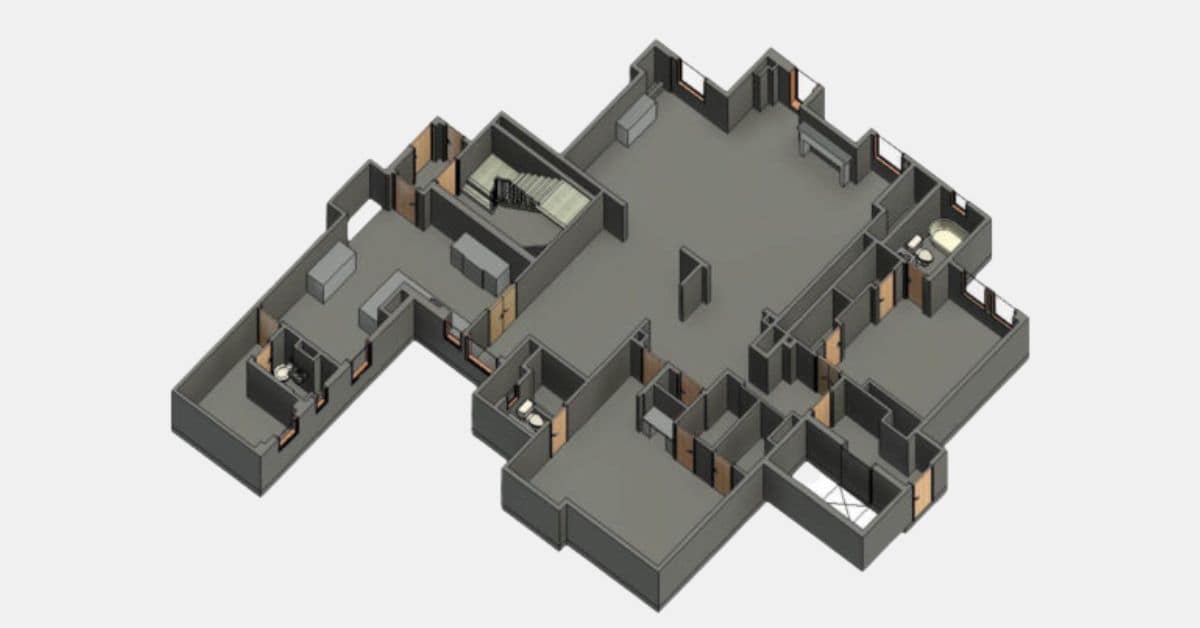
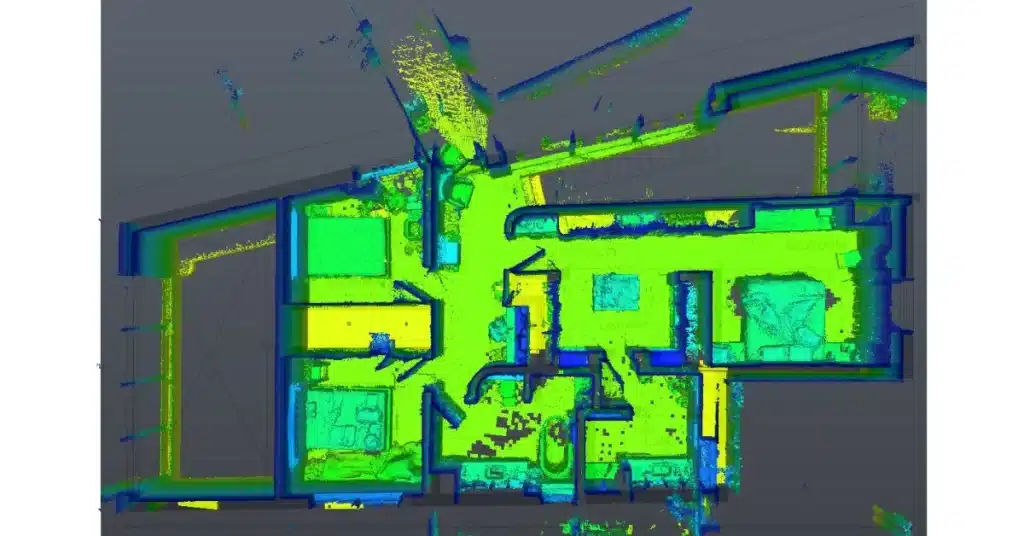
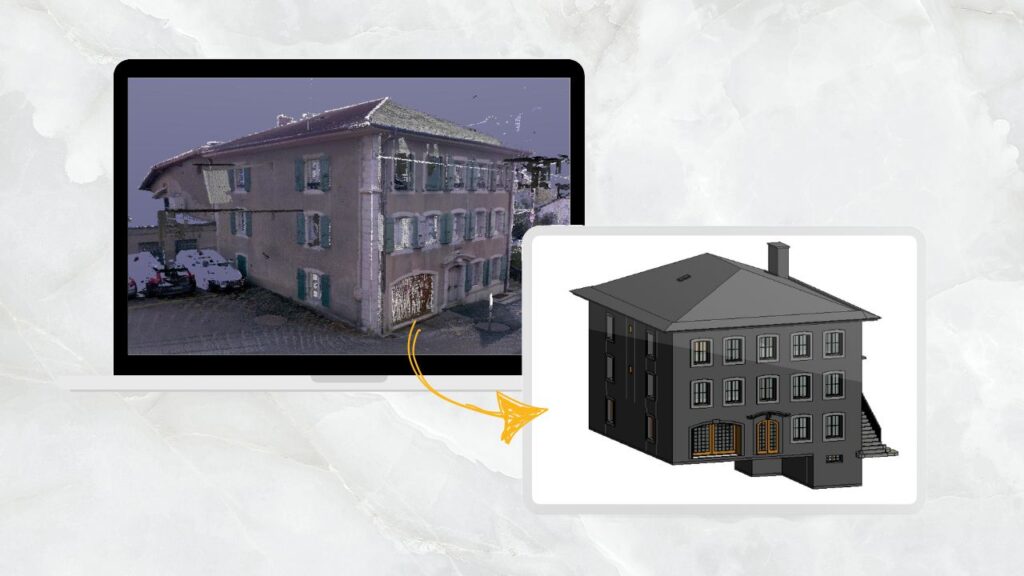
Laser scanning captures these conditions as point cloud data, recording millions of spatial points. Using Autodesk Revit, designers can import this data and create precise models.
This forms the basis of scan to BIM conversion, enabling teams to work from accurate building representations instead of outdated drawings, reducing errors and avoiding costly surprises.
8. Easy Conversion to 2D Drafting Outputs
BIM is widely used, yet construction teams still rely on traditional drawings. Autodesk Revit bridges this gap by generating floor plans, sections, and elevations directly from the model without recreating geometry.
These outputs integrate with scan to CAD workflows, enabling seamless collaboration with 2D-based teams. BIM enhances modeling while still supporting traditional documentation needs.
9. Advanced MEP Coordination
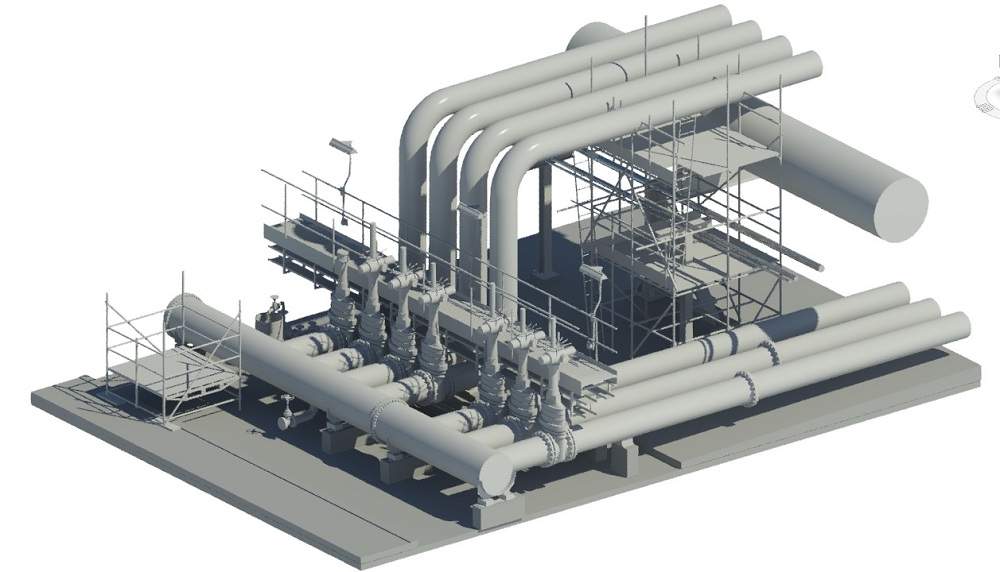
The mechanical, electrical, and plumbing systems are usually the most intricate systems within the building itself. The planning involved in running ducts, conduits, pipes, and cable trays through the structural frameworks is complex.
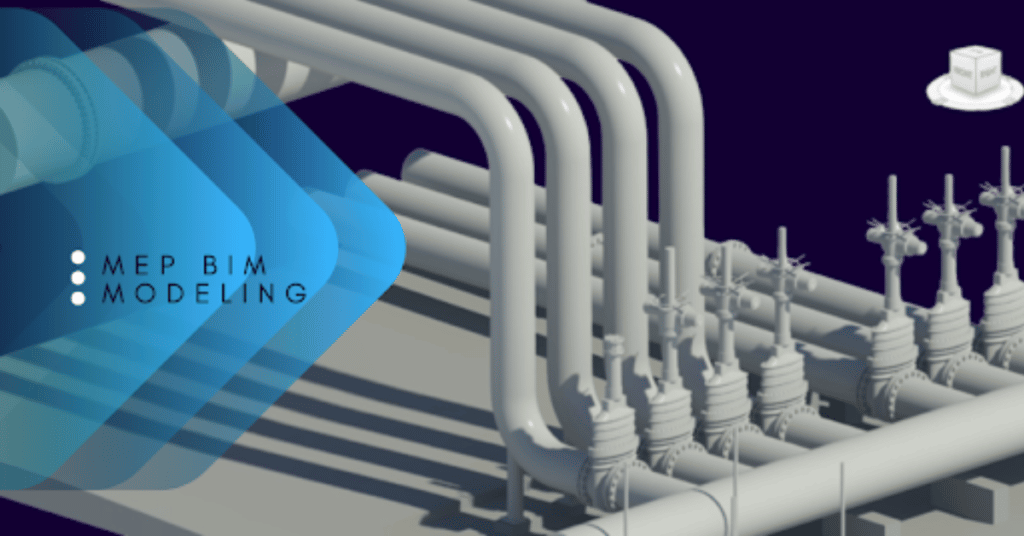
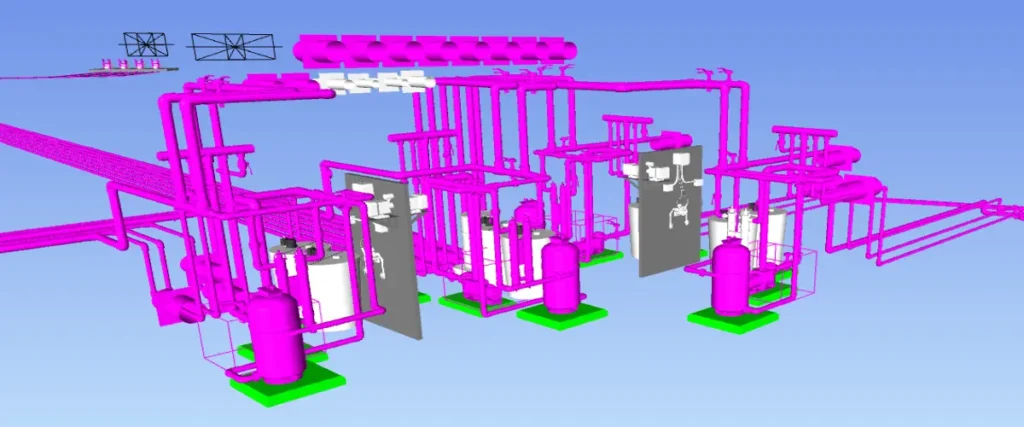
Revit offers dedicated tools for MEP BIM modeling, enabling engineers to design intelligent system models that understand flow direction, equipment ratings, and space constraints.
When the MEP systems interact with the architectural and structural models, the coordination is significantly enhanced. The model will also assist in the identification of potential conflicts in the system, ensuring that the systems will fit within the space provided.
10. Future-Ready Facility Management
A building’s lifecycle extends far beyond design and construction. Once completed, the structure enters decades of operation and maintenance.
Revit BIM models can support this phase as well.
Because the model stores detailed information about building components—equipment specifications, manufacturer data, maintenance schedules—facility managers can reference the BIM model when planning repairs or upgrades.
Some organizations integrate the benefits of Revit BIM Modeling with facility management software, enabling building owners to track assets and manage operations more efficiently.
Why Architects and Engineers Prefer the Benefits of Revit BIM Modeling Services

Revit has gradually become the preferred BIM platform across much of the AEC industry.
Part of the appeal lies in its flexibility. The software adapts easily to different project scales, from small residential developments to complex commercial structures.
It also supports compliance with international BIM standards that many governments and developers now expect.
Another advantage is competitive positioning. Firms using BIM Outsourcing workflows often present stronger proposals during project bidding because clients recognize the benefits of coordinated digital models.
And then there’s sustainability.
Revit models support energy analysis, daylight studies, and building performance simulations. Designers can evaluate environmental performance early in the design stage, which helps meet modern sustainability goals.

Conclusion
The shift to BIM models has completely changed the way professionals in the AEC industry go about their work. With the use of the benefits of Revit BIM Modeling Services, the level of precision in the design process, collaboration, detection of errors, and generation of reliable documents is greatly enhanced.
In the modern world, these features are no longer luxuries but necessities for architects, engineers, and construction professionals handling complex projects, often supported through efficient CAD outsourcing solutions.
In the US and the UK, the evolution of the digital construction industry is set to see Autodesk Revit playing an instrumental role in this ongoing transformation.
Why choose Cresire for Revit BIM Modeling Services?
Cresire supports architects, engineers, contractors, and developers with reliable Revit BIM Modeling Services designed for accurate and efficient project delivery across complex construction environments. Our skilled team develops precise architectural, structural, and MEP models using Autodesk Revit, following LOD-based modeling standards to meet project requirements at every stage.
We implement structured workflows with strict QA/QC checks to ensure high accuracy and coordination readiness with tools like Autodesk Navisworks. With scalable CAD outsourcing support, global project experience, and a focus on faster turnaround, Cresire helps clients reduce costs while maintaining high-quality BIM deliverables.
Frequently Asked Questions - FAQs
1. How are the benefits of Revit BIM Modeling Services for architects?
Architects and design professionals will benefit from design visualization, easy extraction of drawings, live changes, and improved collaboration with other stakeholders and teams involved in the project, resulting in reduced drafting errors and faster completion of projects.
2. Why are engineers using BIM instead of traditional CAD drafting?
BIM models include essential design details, enabling clash detection, calculation of quantities, and other forms of building analysis. Project managers and design consultants can easily identify and solve possible clashes on time, reducing costly changes in construction.
3. How do scan to BIM conversion services aid renovation projects?
Scan to BIM conversion services include converting point clouds of laser scans into accurate and detailed 3D building models (Architectural, Structural, and MEP).
4. What is the difference between scan to CAD services and BIM modeling?
Scan to CAD services include converting laser scan details into accurate and detailed drawings, whereas BIM modeling includes creating accurate and detailed 3D models with building information, enabling coordination, analysis, and other building management functions.
5. How does MEP BIM modeling services improve coordination?
The MEP BIM modeling services create an environment where engineers can design and create the MEP systems, such as mechanical, electrical, and plumbing systems, and this will improve coordination and accuracy in the installations.
6. Can Revit BIM Modeling Services reduce costs?
Yes, Revit BIM modeling services will reduce costs, as accurate takeoffs will reduce waste and improve coordination, thus reducing costs associated with delays and waste.
Our Recent Projects on BIM Services

Related Posts