Table of Contents
Introduction: When Measurements Are Off, Everything Is Off
On complex construction and retrofit projects, even a small measurement error can snowball into rework, delays, and budget overruns. Engineers struggle with outdated drawings. Architects inherit undocumented site changes. Contractors discover clashes only after work has started.
This is exactly where Scan to CAD services change the game.
By converting real-world conditions into precise CAD drawings, Scan to CAD eliminates guesswork and gives AEC professionals a reliable foundation for design, coordination, and execution. In this guide, we’ll break down the benefits of Scan to CAD, explore real-world use cases, and help you decide if it’s the right solution for your next project.
What Is Scan to CAD Technology?
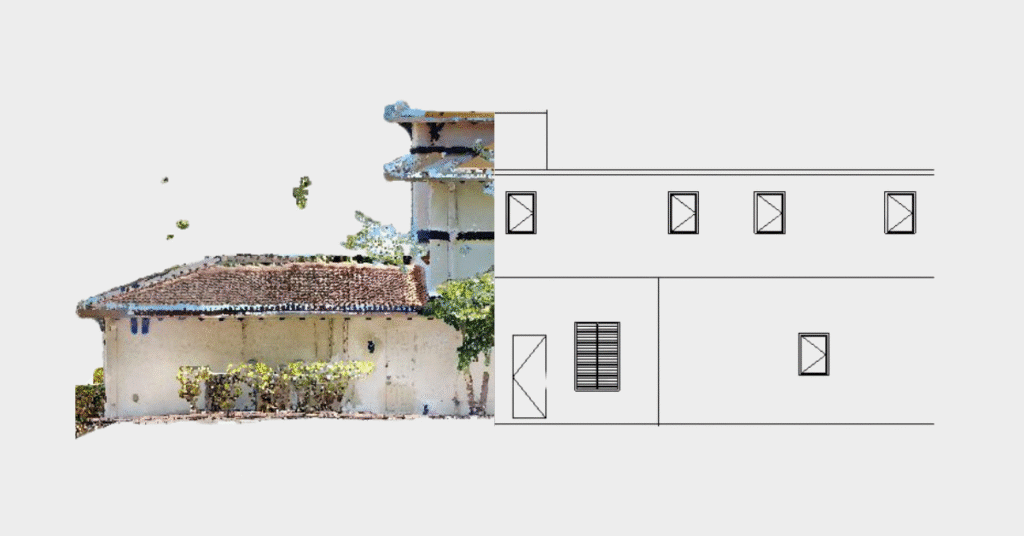
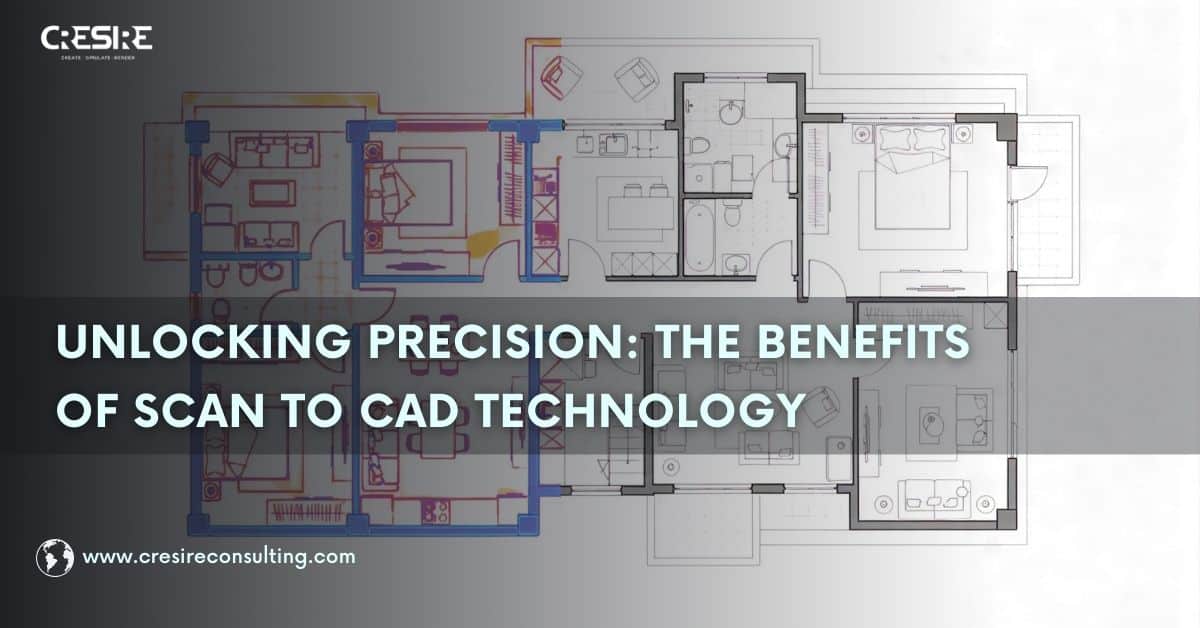
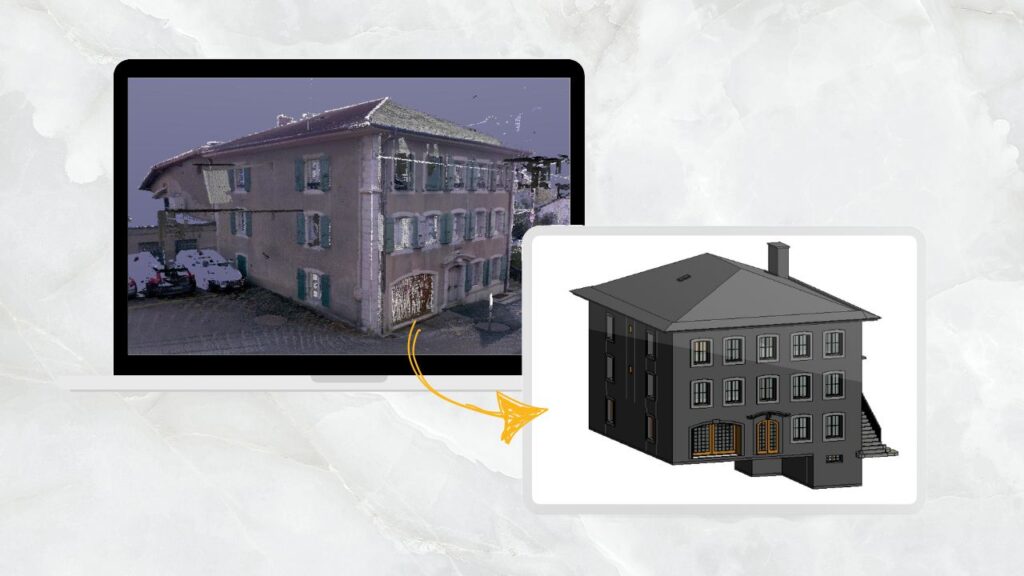
Scan to CAD is the procedure of scanning physical environments using 3D laser scanning and then translating the point cloud data into 2D CAD drawings or 3D CAD models (DWG, DXF, and so on).
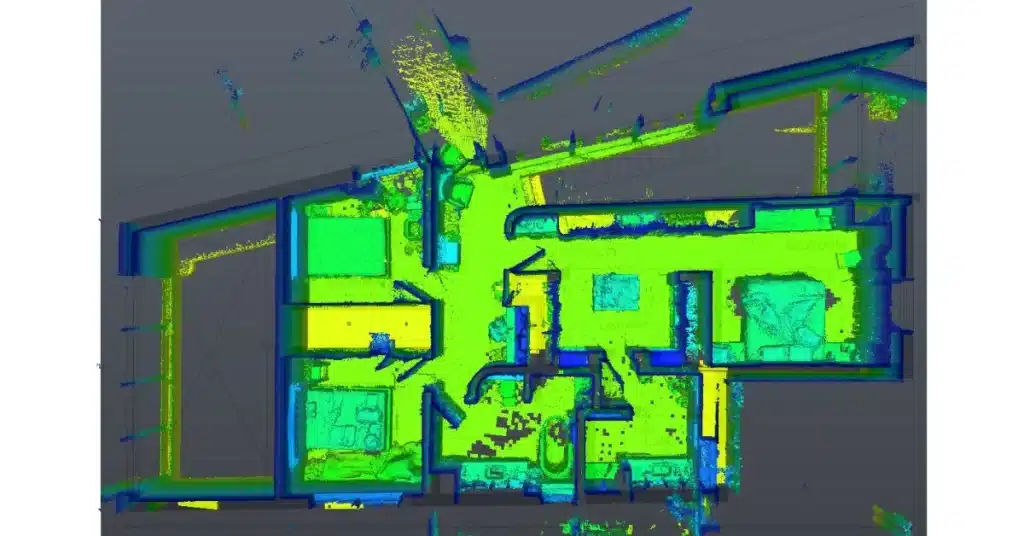
In simple terms, Laser scanners capture millions of spatial data points. These points form a high-density point cloud. The point cloud is translated into measurable CAD drawings. This creates a digital representation of the as-built environment with millimeter-level accuracy.
Why Traditional Measurement Methods Fall Short
- Tape measures and handheld tools miss hidden elements
- Manual surveys are time-consuming and error-prone
- Legacy drawings rarely match current site conditions
- Multiple site visits increase cost and disruption
Key Benefits of Scan to CAD Technology
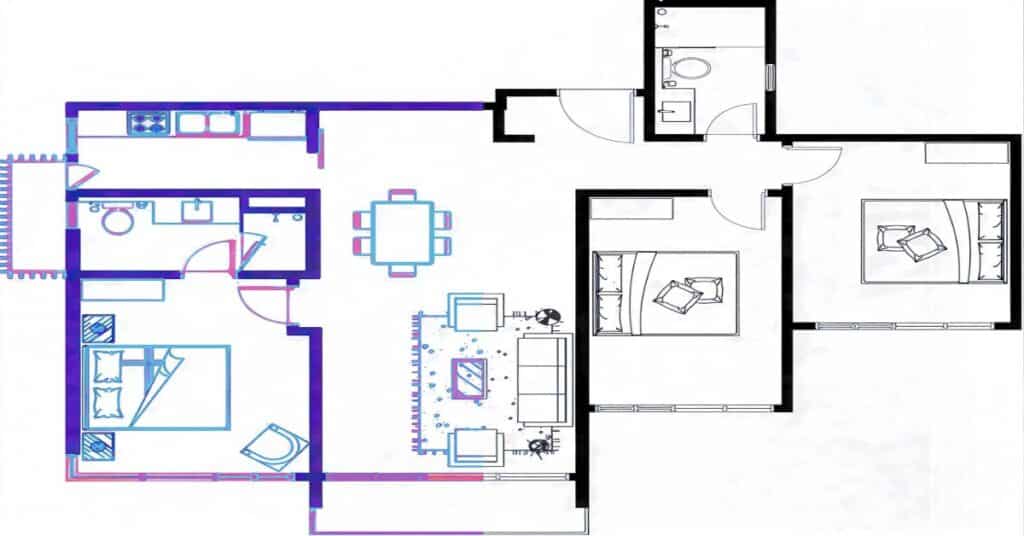
1. Unmatched Accuracy and Precision
Laser scanners capture millions of data points per second, delivering Exact dimensions of walls, floors, ceilings, and structures, Accurate locations of MEP components, and True geometry of irregular or aged buildings. This level of precision is critical for renovation, retrofit, and as-built documentation projects.
2. Faster Project Turnaround
Speed is another major advantage of Scan to CAD. Site scanning can be completed in hours instead of days. CAD teams work remotely from point cloud data, and fewer site visits are required.
3. Reduced Rework and Cost Overruns
With Scan to CAD, Designers work from verified as-built data. Clashes and misalignments are identified early, and Change orders due to measurement errors are minimized. From an ROI perspective, this is one of Scan to CAD’s strongest advantages for contractors and owners alike.
4. Ideal for Renovation, Retrofit, and As-Built Projects
Scan to CAD is particularly valuable when Original drawings are missing or unreliable, Buildings have undergone undocumented changes, and Structures are complex or irregular. This makes it indispensable for renovation projects, historic buildings, and brownfield developments.
5. Seamless Integration with BIM and Design Workflows
Scan to CAD acts as a bridge between the physical site and digital workflows. Outputs can be used directly in AutoCAD and similar platforms, referenced for BIM modeling (Scan to BIM), and Integrated into clash detection and coordination workflows. This interoperability is a key reason why the BENEFITS OF 3D Scan to CAD extend beyond drafting into full project lifecycle optimization.
6. Improved Stakeholder Collaboration
Accurate CAD drawings derived from scan data help Architects design with confidence, Engineers coordinate systems accurately, and Contractors plan installations precisely. Everyone works from a single source of truth, reducing miscommunication.
When Should You Choose Scan to CAD?

Scan to CAD is ideal if:
- You need high-accuracy drawings
- Existing documentation is unreliable
- The project involves renovation or retrofit
- Precision impacts cost, safety, or compliance
From a decision-maker’s perspective:
- Risks are identified early
- Budgets are more predictable
- Timelines are easier to manage
Advantages of Point Cloud to DWG Conversion

Point cloud to DWG is the most common Scan to CAD deliverable. Here’s why it matters:
- Precise floor plans, elevations, and sections
- Accurate reflection of real-world deviations
- Faster approval and coordination cycles
For engineers and architects, these advantages of point cloud to DWG directly translate into better design decisions.
Our CAD Services Recent Projects
Get in touch with Cresire Consulting
Browse the Cresire website to learn more about our services or contact us directly on the contact page and discuss your needs.
We are dedicated to building long-term business relationships with reputable clients and are fully committed to delivering complete customer satisfaction. We invite you to share your project requirements with us, and we look forward to collaborating.
You can also email us your details at enquiry@cresireconsulting.com
Frequently Asked Questions - FAQs
What are the main benefits of Scan to CAD?
The main benefits of Scan to CAD include high accuracy, faster turnaround, reduced rework, and reliable as-built documentation for design and construction.
Is Scan to CAD better than manual surveying?
Yes. Scan to CAD provides significantly higher accuracy, captures complex geometries, and minimizes human error compared to manual surveys.
What industries use Scan to CAD the most?
AEC, real estate, industrial facilities, manufacturing plants, and heritage preservation projects frequently rely on Scan to CAD.
How accurate is Scan to CAD?
Accuracy typically ranges from ±2mm to ±5mm, depending on project requirements and scanning equipment.
Can Scan to CAD be used for BIM projects?
Absolutely. Scan to CAD often serves as the foundation for Scan to BIM workflows.
Work with CRESIRE for the Best 3D Scan to CAD Services

As a professional BIM Services provider, Scan to CAD conversion is handled by experienced professionals who understand both field conditions and design intent. Our approach focuses on:
- Accuracy aligned with project tolerance requirements
- Clear, usable CAD deliverables, not over-modeled drawings
- Smooth collaboration with architects, engineers, and contractors
If you’re planning a renovation, retrofit, or need reliable as-built CAD drawings, a short consultation can help define the right approach.
Conclusion: Precision Is No Longer Optional
In today’s rapidly changing AEC world, accuracy translates to cost, time, and trust. The advantages of Scan to CAD services extend beyond drafting and make it possible to make informed decisions, avoid risks, and achieve successful project results.
Scan to CAD services eliminate guesswork and allow professionals to design and construct with confidence. When it comes to accuracy, it’s not an upgrade; it’s a requirement.
Contact Us:
We are committed to establishing long-term business relationships with reputable clients and are fully dedicated to the delivery of complete customer satisfaction. We would be delighted if you would share your project details with us. GET A FREE QUOTE today!
You can email us your details at enquiry@cresireconsulting.com or contact us on
USA & Canada: (+1) 757 656 3274
UK & Europe: (+44) 7360 267087

Devashish is Founder/Director at Cresire where he leads BIM services. He holds a bachelor’s degree in Civil Engineering from the University of Sheffield and an MSc in Construction Project Management from The University of the West of England. His vision behind CRESIRE is to provide BIM services, adhering to best practices and procedures, to global customers, helping customers to save extensive production costs and overruns.
Our Recent Projects on BIM Services

Related Posts